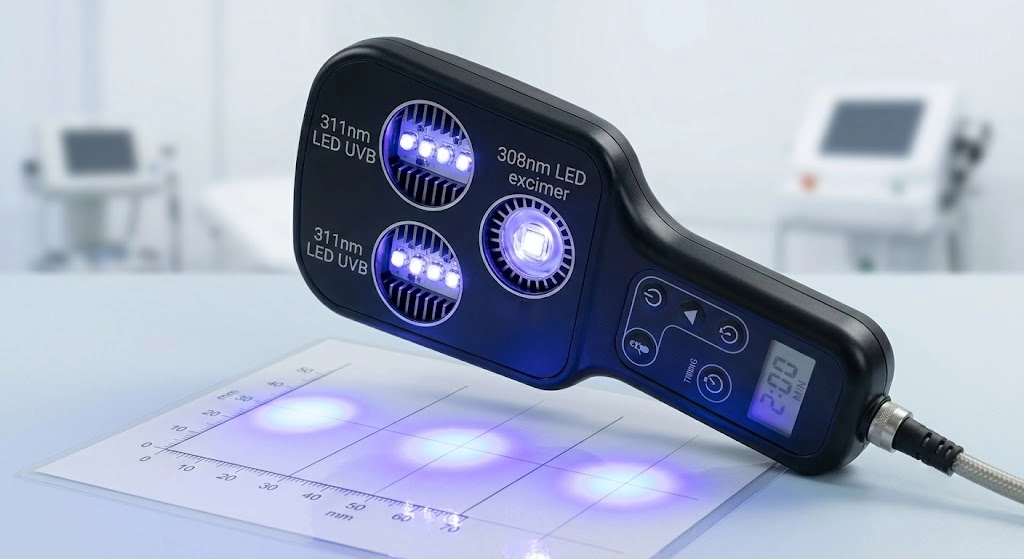
Once a stubborn skin condition like vitiligo/psoriasis has taken hold, it can be a long and arduous battle for patients to restore melanin and return to their original skin color.
Multiple researches (e.g. PMID: 22199059) have shown that UV light therapy is effective in treating various skin conditions such as vitiligo, psoriasis, and eczema. However, the cost of individual sessions at specialized clinics can be quite high, and the cumulative expenses over time can be a significant burden for an average family.
Therefore, for patients from ordinary households, choosing a convenient and suitable home-use light therapy device is undoubtedly the wisest and most cost-effective investment.
Currently, there are three types of home light therapy devices available on the market and approved by the FDA: 308nm LED, 308nm excimer, and 311nm NB-UVB. With so many options to choose from, it can be confusing to determine which one is the best.
In medical terms, all three types of light therapy devices are considered the best options for treating vitiligo and psoriasis. Therefore, when selecting a light therapy device, there is no single best option; rather, the best choice depends on your current skin condition and budget. The following content analyzes how to choose a light therapy device that is best suited for an individual to use at home.
Figure Out Three UV Lights for Phototherapy
308nm LED

The light source comes from an LED lamp, and the light energy is high. 308nm is currently recognized in clinical practice as an extremely effective wavelength for inducing T-cell apoptosis and activating melanocytes. Its energy can penetrate deeper into the skin’s surface, reaching the shallow layer of the dermis.
Clinical studies (e.g. PMID: 17659006) have shown that the coloration speed and efficacy of 308nm are generally higher than those of 311nm, particularly for conditions like vitiligo, which require strong stimulation of melanin regeneration.
Pros:
- The energy intensity is greater than that of 311nm NB-UVBs, and the color restoration of the patches occurs quickly.
- Its lifespan is longer than that of 308nm excimer, and the purchase cost is reasonable, making it a cost-effective option.
Cons:
- Limited selection of low-priced products available in the market.
308nm Excimer
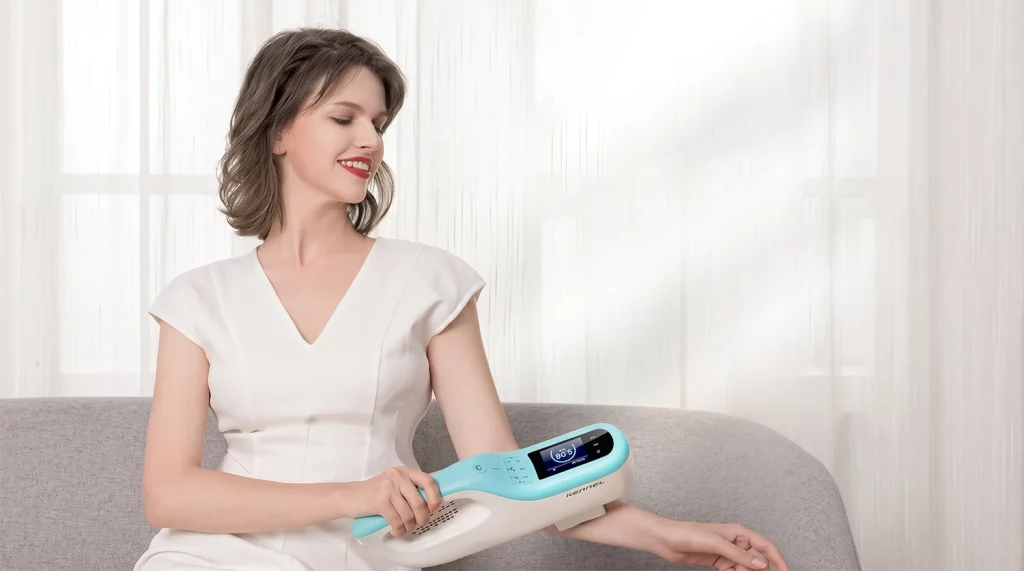
Developed and introduced into clinical use in the late 1990s and early 21st century. The phototherapy devices suitable for home use on the market are excimer light. Another type used in professional medicine is excimer laser, which has higher standards and safety requirements for use. Therefore, it can generally only be operated by professional dermatologists in specialized clinics or hospitals.
The 308nm Excimer produces light from xenon chloride (XeCl) gas and is characterized by its high energy and rapid effectiveness. Because the beam can be focused on the affected area, it is classified as targeted therapy. Due to the uniqueness of its light source, its lifespan is limited and often significantly shorter than that of LED light.
Pros:
- High energy intensity, rapid improvement of lesion coloration.
- Concentrated beam, suitable for localized treatment of severe lesions.
Cons:
- There may be a more pronounced reddening of the skin after exposure.
- Limited lifespan, higher purchase cost, and generally average value for money.
311nm NB-UVB
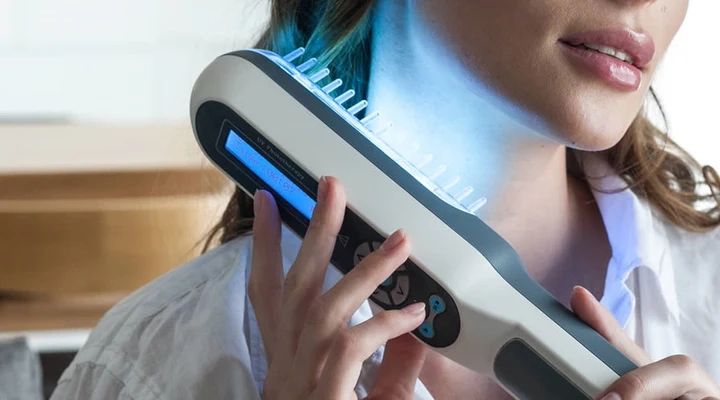
A classic narrow-band spectrum. The light source originates from fluorescent NB-UVB lamps lamp, and its energy is relatively mild, with fewer side effects (erythema effect). The treatment effect is achieved by suppressing localized immune responses in the skin.
The beam of 311nm NB-UVB spreads out, although the exposure range is relatively wide, the efficacy of treating the same area with a single exposure is lower. It takes longer cumulative exposure to see results. While it may take a bit longer to show effects compared to 308nm, its efficacy is highly stable and it is one of the gold standard wavelengths in dermatology.
Pros:
- High level of safety during use.
- Minimal reddening of the skin after exposure; long lifespan and relatively low purchase cost, making it a cost-effective option.
- The beam spreads out, making it suitable for treating large areas of skin with patches.
Cons:
- Energy intensity is slightly lower, and the re-coloration of patches takes longer to show results.
Parameters Comparison
Note: The pricing of professional household UV light light lamps from various brands in the market is influenced by factors such as brand identity, raw material costs, and research and development expenses, making it impossible to establish a uniform pricing standard.
Therefore, the prices listed in this table are primarily based on a specific brand of home UV light lamp.
| Lamp | Price Range | Life Span | Exposure Area | Exposure Intensity | Time to Effect |
| 308nm LED | USD 400 ~ USD 3000 | 1000h~ 5000h | 30 cm² ~ 55 cm² | 20~45 mW/cm² | 4-6 times exposure |
| 308nm Excimer | USD 1000 ~ USD 3000 | ≥ 500 hours | 20 cm² ± 10% | 35~45 mW/cm² | 6-12 times exposure |
| 311nm NB-UVB | USD 200 ~ USD 500 | 1000h | 55 cm² ~100 cm² | 20 mW/cm² | 15-20 times exposure |
Deep Dive
Energy Intensity
308nm Excimer > 308nm LED > 31nm NB-UVB
- 308nm Excimer
It employs a xenon chloride (XeCl) gas-based light source. Whether it’s an excimer laser or an excimer lamp, its energy density is extremely high and is released instantaneously, making it highly penetrative and capable of targeting and directly affecting skin lesions. As a result, it achieves the highest efficiency per treatment session.
- 308nm LED
It inherits the 308nm wavelength, which is considered the gold standard for treating vitiligo/psoriasis (the ability of 308nm to induce apoptosis in T cells and stimulate the proliferation of melanocytes is among the strongest in the UVB spectrum).
Although the instantaneous energy output of LED light sources is weaker than that of excimer lamps, research on related 308nm LEDs and 308nm Excimer (PMID: 38752300) indicates that, by extending the total duration of individual exposures to achieve the same dose of exposure, the overall efficacy is ultimately very close to that of excimer lamps.
- 311nm NB-UVB
311nm is an established, golden wavelength within the narrow-spectrum UVB (NB-UVB) range. Large-scale full-body phototherapy chambers in traditional hospitals often use this wavelength. While it is highly effective and safe, from an energy biological perspective, 311nm’s ability to stimulate melanin is slightly weaker than 308nm.
Additionally, the energy released by LED light sources is relatively gradual, resulting in the slowest onset of effects and the longest treatment duration.
Areas Treated and Ease of Use
Areas Treated
(311nm suitable for the entire body, 308nm suitable for localized areas)
The treatment area of a phototherapy device depends on the size of its light-emitting port and the type of light source.
Typically, 311nm NB-UVB phototherapy devices are designed with handheld large panels or dual-row lamp tubes, and the 311nm NB-UVB light spreads outward. The area of the light-emitting port is usually over a few hundred square centimeters.
Both 308nm excimer and 308nm LED devices are designed with the core principle of high energy, small area, precise targeting. Manufacturers design phototherapy devices with different light-emitting port sizes for different parts of the body.
For example, the light-emitting port for the torso is larger, but it is generally kept around the size of a palm. The light-emitting port for the face is smaller, typically around 5 cm².
Ease of Use
308nm Excimer and 308nm LED Home Light Therapy Devices
Unparalleled convenience for localized and stubborn lesions: If your skin lesions are limited to only one or two areas (such as a white patch on your face or psoriasis on your hands), 308nm is extremely convenient. Its energy is extremely high, and a single exposure typically only takes a few seconds to a dozen seconds. Just pick it up and snap a shot, making it incredibly time-saving.
Protection of normal skin (targeted treatment): Exposure to ultraviolet light can cause normal skin to darken, become dry, or even age. The small output port of 308nm can perfectly avoid the surrounding normal skin, focusing only on the affected areas for precise exposure.
The convenience disaster when the condition affects the entire body: Conversely, if your skin lesions cover your entire body, using a 308nm device becomes a disaster. Due to the small aperture of the light source, you need to move the handle over different areas of your body like stamping. If you have dozens of lesions scattered throughout your body, a single treatment session could take an hour, leading to extreme fatigue and the risk of missing or overexposing certain areas.
311nm NB-UVB Home Light Therapy Device
Excellent overall exposure efficiency: If your psoriasis, atopic dermatitis, or vitiligo affects your entire body (e.g., covering your entire back, legs, or multiple areas throughout your body), the 311nm device can cover all those areas at once. Small areas that would require dozens of treatments can be resolved in just a few minutes using the 311nm device.
Large safety window, easy operation: The energy release of 311nm is relatively gentle, and the window for erythema (sunburn reaction) is wide. This means that even if the patient’s exposure time is slightly overestimated by a few seconds or there is some deviation in the distance of exposure, it is less likely to cause severe skin blisters or burns. The psychological stress of home-based operation is thus reduced.
Long-term Usage Costs and Lifespan
(LEDs have a long lifespan, while excimer lamps require consideration of tube wear).
308nm LED and 311nm NB-UVB:
Lifespan performance: Whether it’s 308nm or 311nm, as long as LED (Light Emitting Diode) or NB-UVB fluorescent tube technology is used, the lifespan of the chips typically ranges from 1,000 to 5,000 hours or more.
Actual conversion: Assuming that it takes 1 minute per session of exposure, with 3 sessions per week, that’s approximately 150 minutes (2.5 hours) per year. This means that the theoretical lifespan of LEDs or fluorescent tubes would be sufficient for use in homes or routine clinical settings for many lifetimes.
Energy Decay: The energy decay of LED chips is extremely slow. It is virtually unnecessary to replace the light source due to decreased luminosity throughout the entire lifecycle of the device. Regarding NB-UVB fluorescent lamp tubes, on the other hand, can be replaced by users themselves. Even when the lamp tubes reach the end of their lifespan, the cost for users to purchase new ones is significantly reduced.
308nm Excimer:
The 308nm excimer technology, whether it involves excimer light generated from xenon chloride gas, due to its high energy characteristics, makes the light source a consumable item.
Lifespan Performance: Home/portable Excimer Light: The effective lifespan of the core lamp (typically a rare gas lamp filled with xenon chloride gas) is generally around 300 to 500 hours.
Energy Decay: As the gas in the excimer lamp tube ages or the electrodes deteriorate during use, the light intensity gradually decreases. Once this decline reaches a certain point, the device will indicate that the lamp tube must be replaced or recalibrated, as otherwise, the treatment will be ineffective due to insufficient dosage. However, the excimer lamp tube is unable to be replaced separately by users themselves. Users usually need to repurchase one, which means its cost is higher.
How to Choose Based on Your Situation
If your lesions are on those persistent, small areas like face, hands and feet, we recommend 308nm Excimer. (Case A)
The reasons below:
High energy output, fastest results: The characteristic feature of excimer (excimer) light sources is their high energy density (high targeting specificity). They can achieve the therapeutic dose within a very short period of time, activating melanocyte cells or suppressing local immune responses.
For persistent skin lesions, conventional phototherapy may not be sufficient to stimulate the necessary response, whereas excimer light often has the ability to break down this barrier of immune tolerance.
Purer wavelength: 308nm is widely recognized as the golden wavelength for treating conditions like vitiligo, offering greater specificity compared to the traditional 311nm wavelength.
If you are seeking value for money, long-term stability, and avoiding the hassle of consumables, choose the 308nm LED. (Case B)
The reasons below:
Extremely long lifespan (no consumable costs): LED chips typically have a lifespan of tens of thousands of hours. This means there is no usage limit; once purchased, it can be used continuously without the need for subsequent renewals or replacements of the light bulb.
Ideal for long-term consolidation: Conditions like vitiligo and psoriasis are chronic diseases. Even when the skin lesions have faded, continued treatment (gradually reducing the dosage) is often necessary. While LED energy is slightly lower than that of excimer light and produces results more slowly, it is safe and gentle, making it an excellent choice for long-term maintenance and consolidation treatments at home.
Good value for money: When considering the total cost of a single purchase and subsequent maintenance, it is the most cost-effective option for long-term treatment for an individual.
If your lesions are widespread, extensive skin lesions throughout the body, please choose 311nm NB-UVB. (Case C)
The reasons below:
Natural area advantages: In UVB technology, the 311nm NB-UVB fluorescent lamp tube is more technologically mature and easier to fabricate into large-area light panels (such as handheld large panels, half-body screens, or even full-body enclosures). In contrast, high-power 308nm chips are difficult to produce in large areas, not only due to high costs but also due to challenges in controlling heat generation and uniformity.
Safety of extensive exposure: The energy density of 311nm (traditional narrow-band UVB) is relatively lower and more dispersed compared to 308nm. When used for extensive, full-body exposure, the safety window for 311nm is wider, making it less likely to cause severe erythema, blisters, or photodermatitis on a large scale.
So, too many words may confuse you, it’s fine. Let’s just take a quick check-out table for your better understanding.
| Dimension | Case A: 308nm Excimer | Case B: 308nm LED | Case C: 311nm NB-UVB |
| Core Advantage | Highest energy, fastest results, effective against stubborn individuals. | Extremely long lifespan, no consumables required, high value for money. | Large area, high efficiency, good safety features. |
| First Figure | Face, Feet, small area; stubborn areas. | Small areas of the torso/limbs, stable phase for consolidation. | Widespread throughout the entire body, covering large areas at one time (e.g., the entire back). |
| Life Span | Limited (about 500hours) | ≥3000hours | ≥3000hours |
| Time to Effect | Short | Medium | Comparatively Short |
As before, there is no such thing as the best phototherapy device; there is only a phototherapy device that is best suited to your individual situation. We offer all three of these certified, high-quality devices on our independent website. (Click [here] to view our full range of phototherapy devices).